Everything you need to trade crypto arbitrage with confidence.
Learn crypto arbitrage and get the most from ArbiHunt, plain-English guides, fee & network explainers, and answers to common questions.
Arbitrage basics
What crypto arbitrage is, how it works, and the concepts behind every opportunity ArbiHunt finds.
8 articlesFees & networks
Trading fees, withdrawal costs and blockchain networks, the details that decide whether a spread is actually profitable.
4 articlesUsing ArbiHunt
Step-by-step guides to the dashboard, filters and opportunity details, and how to act on a spread safely.
8 articlesHelp & FAQ
Accounts, subscriptions, payments and troubleshooting, answers to the questions members ask most.
4 articlesStart here
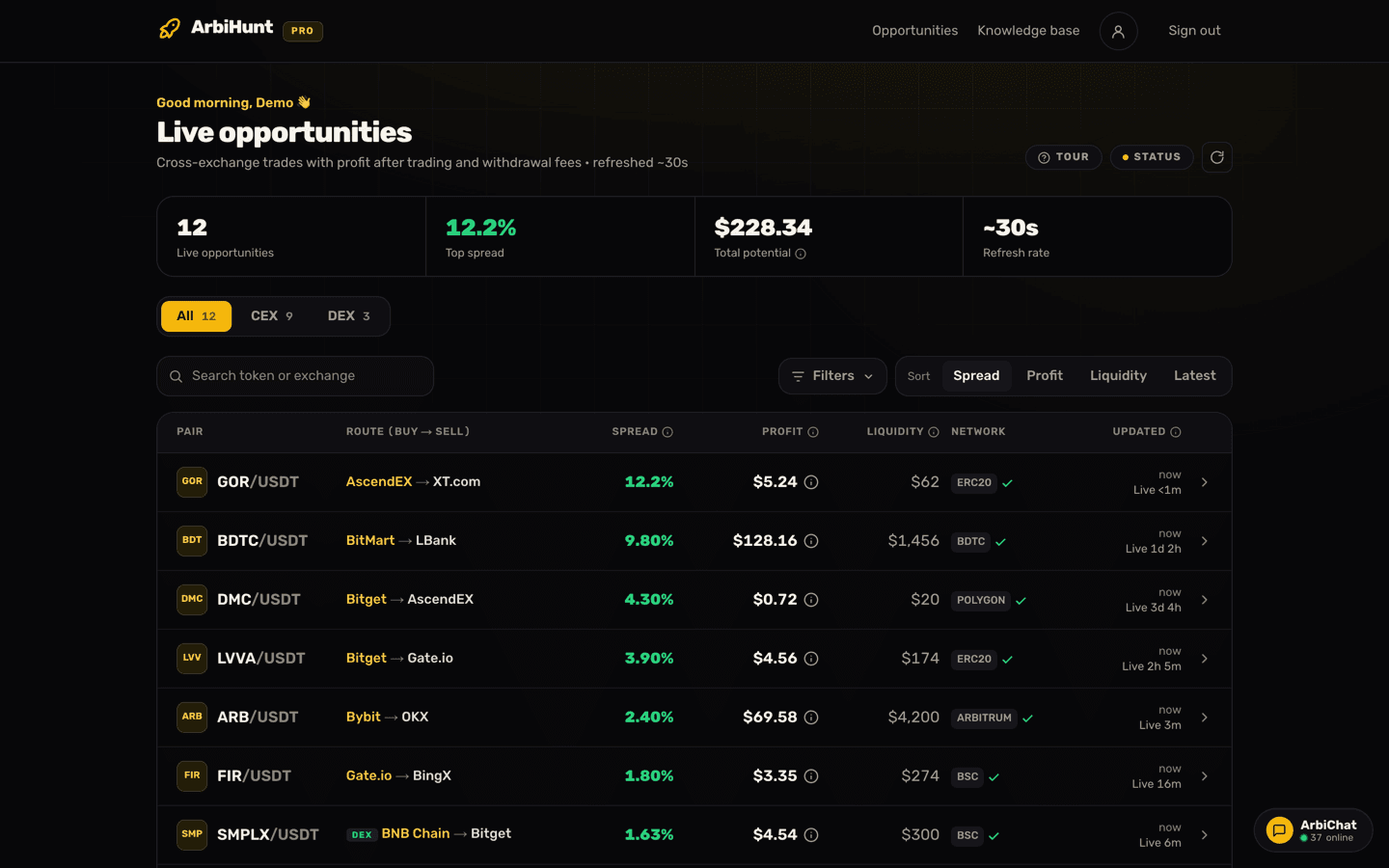
What is crypto arbitrage and how does it work?
Crypto arbitrage means buying a coin cheaper on one exchange and selling it higher on another. How the gaps open, why they close, and what you keep.
11 min read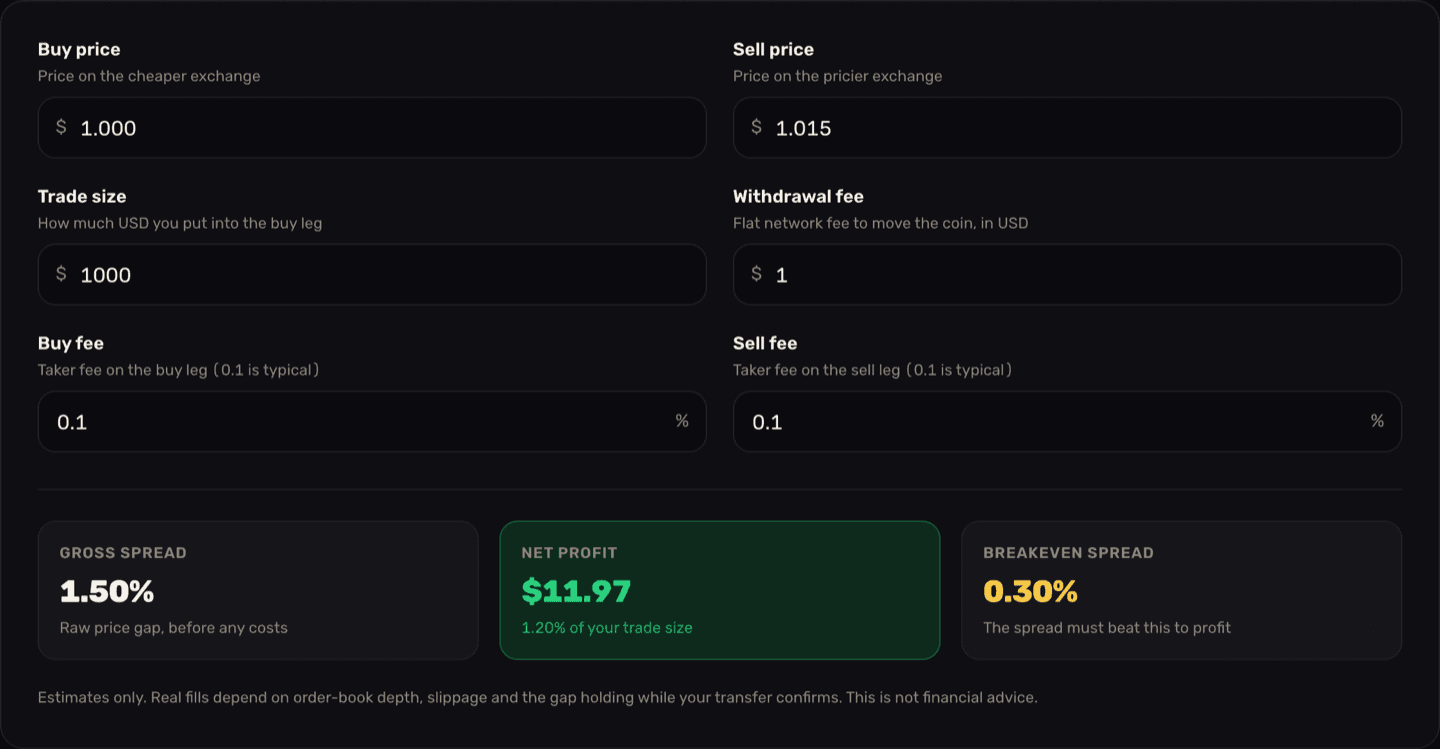
Spread vs. net profit: what an arbitrage spread really pays
A 5% spread can still lose money. Walk the full cost stack: two taker fees, the withdrawal fee, slippage, plus the breakeven formula and two examples.
11 min read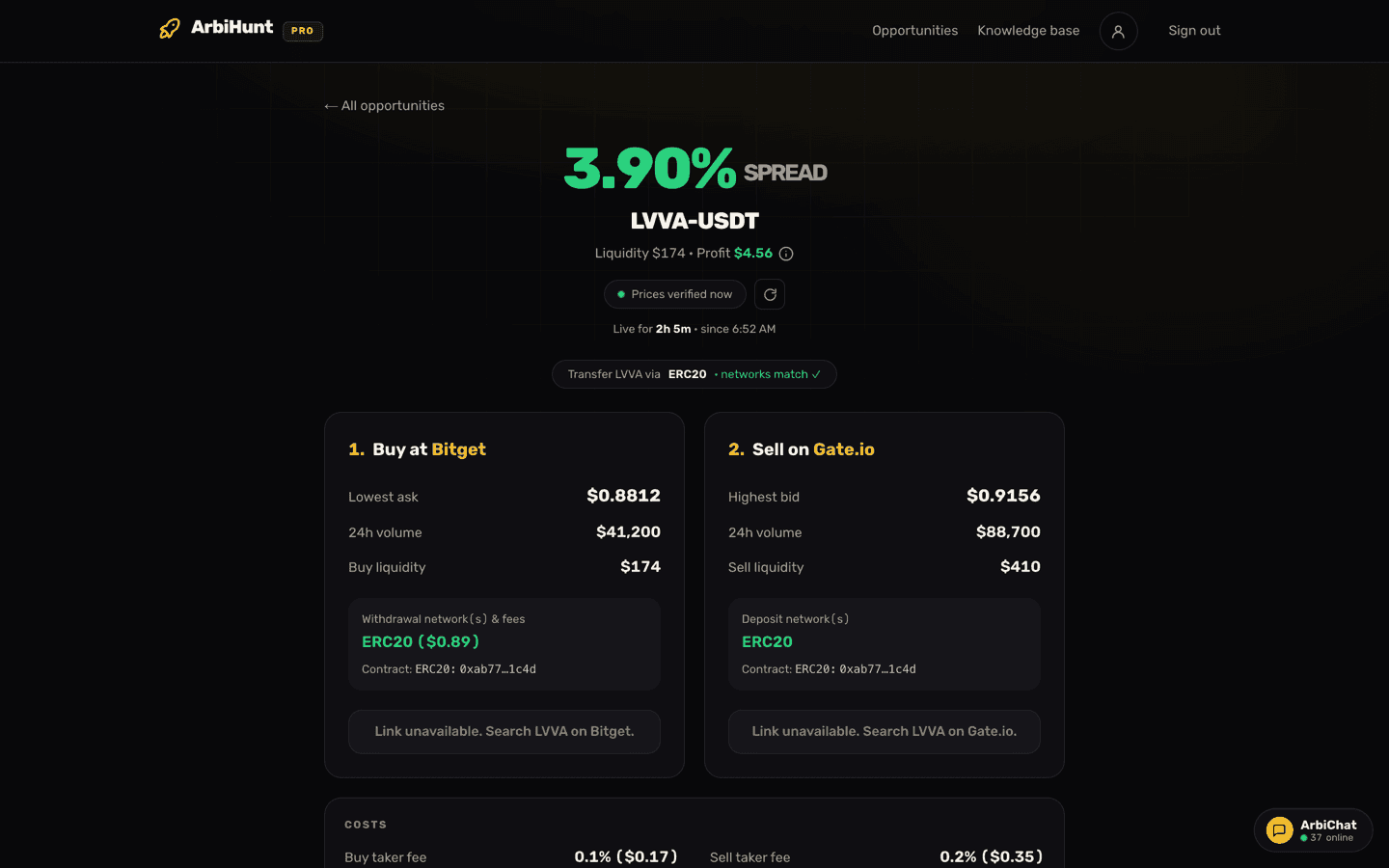
Crypto withdrawal fees: the flat cost that decides small trades
Exchange withdrawal fees are flat, per-network and often above real gas. See the break-even math at $100 to $5,000 and where the fee shows in ArbiHunt.
11 min readArbitrage basics
What crypto arbitrage is, how it works, and the concepts behind every opportunity ArbiHunt finds.
What is crypto arbitrage and how does it work?
Crypto arbitrage means buying a coin cheaper on one exchange and selling it higher on another. How the gaps open, why they close, and what you keep.
11 min readSpread vs. net profit: what an arbitrage spread really pays
A 5% spread can still lose money. Walk the full cost stack: two taker fees, the withdrawal fee, slippage, plus the breakeven formula and two examples.
11 min read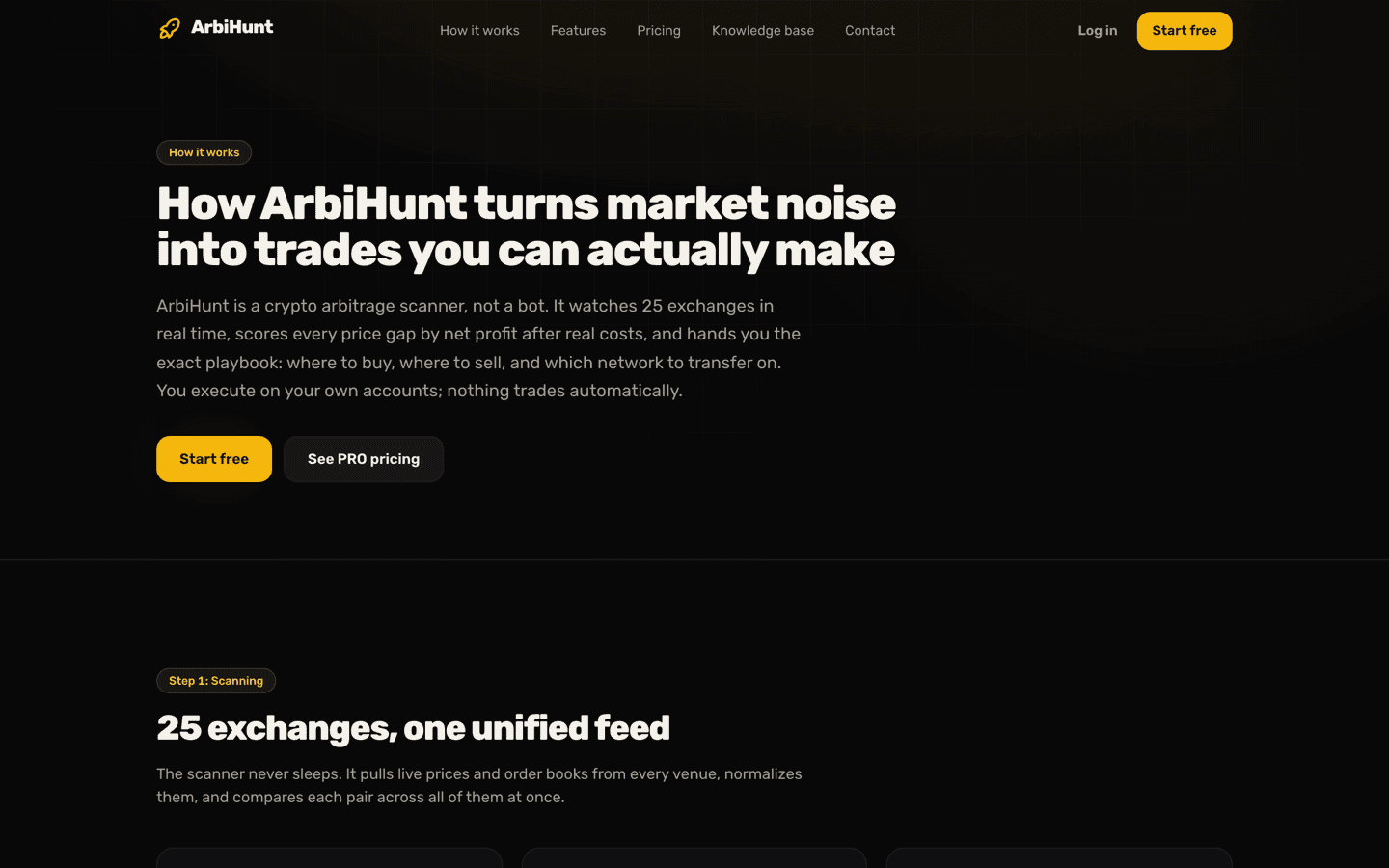
Types of crypto arbitrage: 5 strategies compared
Cross-exchange, triangular, statistical, funding-rate and DEX-CEX arbitrage compared: how each works, what it really costs, and which one suits you.
10 min readIs crypto arbitrage profitable? An honest answer
Crypto arbitrage pays for some people and quietly loses money for others. The real math on capital, fees, speed, and how to tell which one you'd be.
8 min read
Crypto arbitrage risks: 7 ways a trade goes wrong
Is crypto arbitrage safe? The seven failure modes that actually cost traders money, ranked by how often they bite, each with a concrete way to avoid it.
8 min read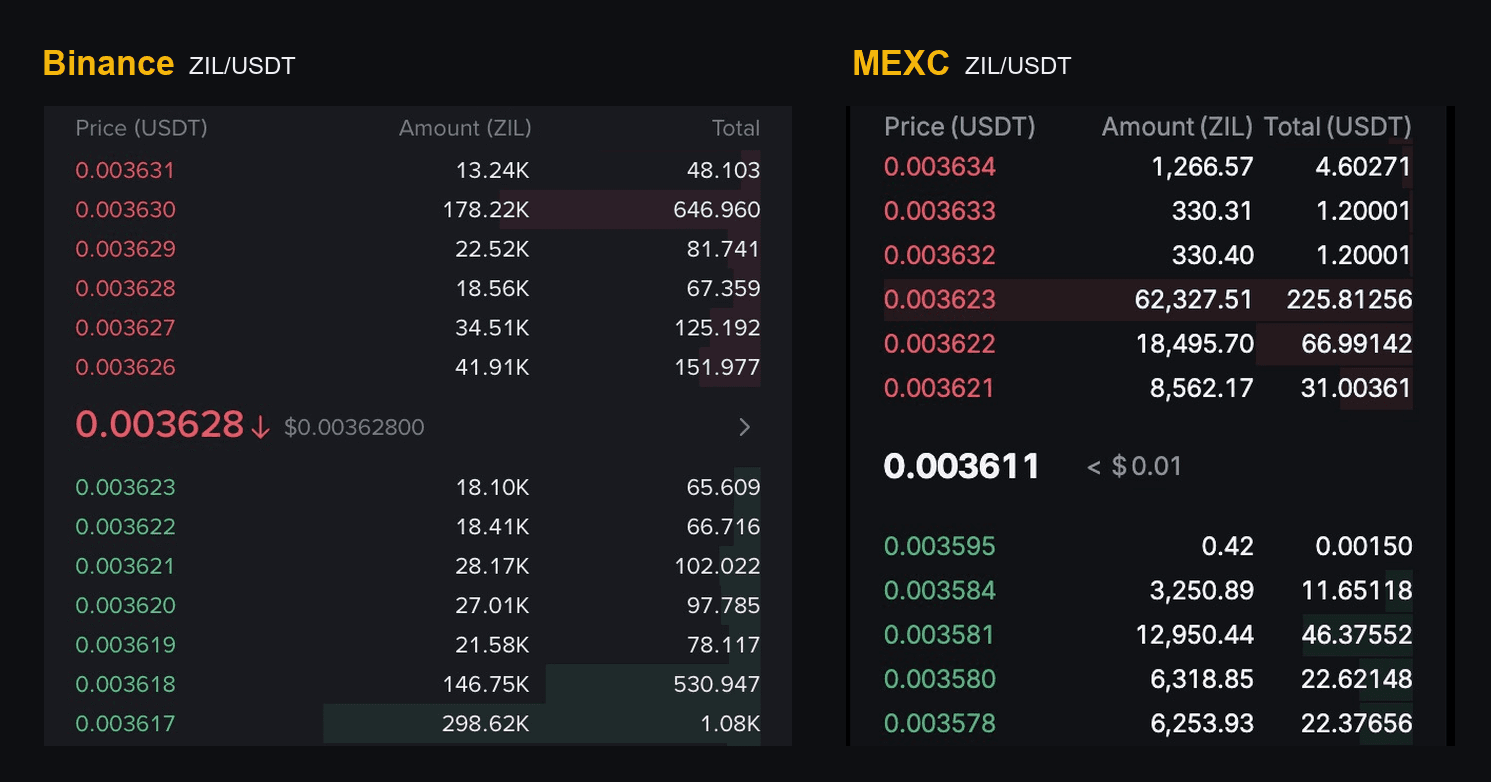
How to read a crypto order book (and why your limit order is not filling)
Bids, asks, the spread and depth, read off two real ZIL/USDT order books. Why a limit order sits unfilled, what a market order really costs, and why ArbiHunt reads books, not last prices.
12 min readFees & networks
Trading fees, withdrawal costs and blockchain networks, the details that decide whether a spread is actually profitable.
Crypto withdrawal fees: the flat cost that decides small trades
Exchange withdrawal fees are flat, per-network and often above real gas. See the break-even math at $100 to $5,000 and where the fee shows in ArbiHunt.
11 min read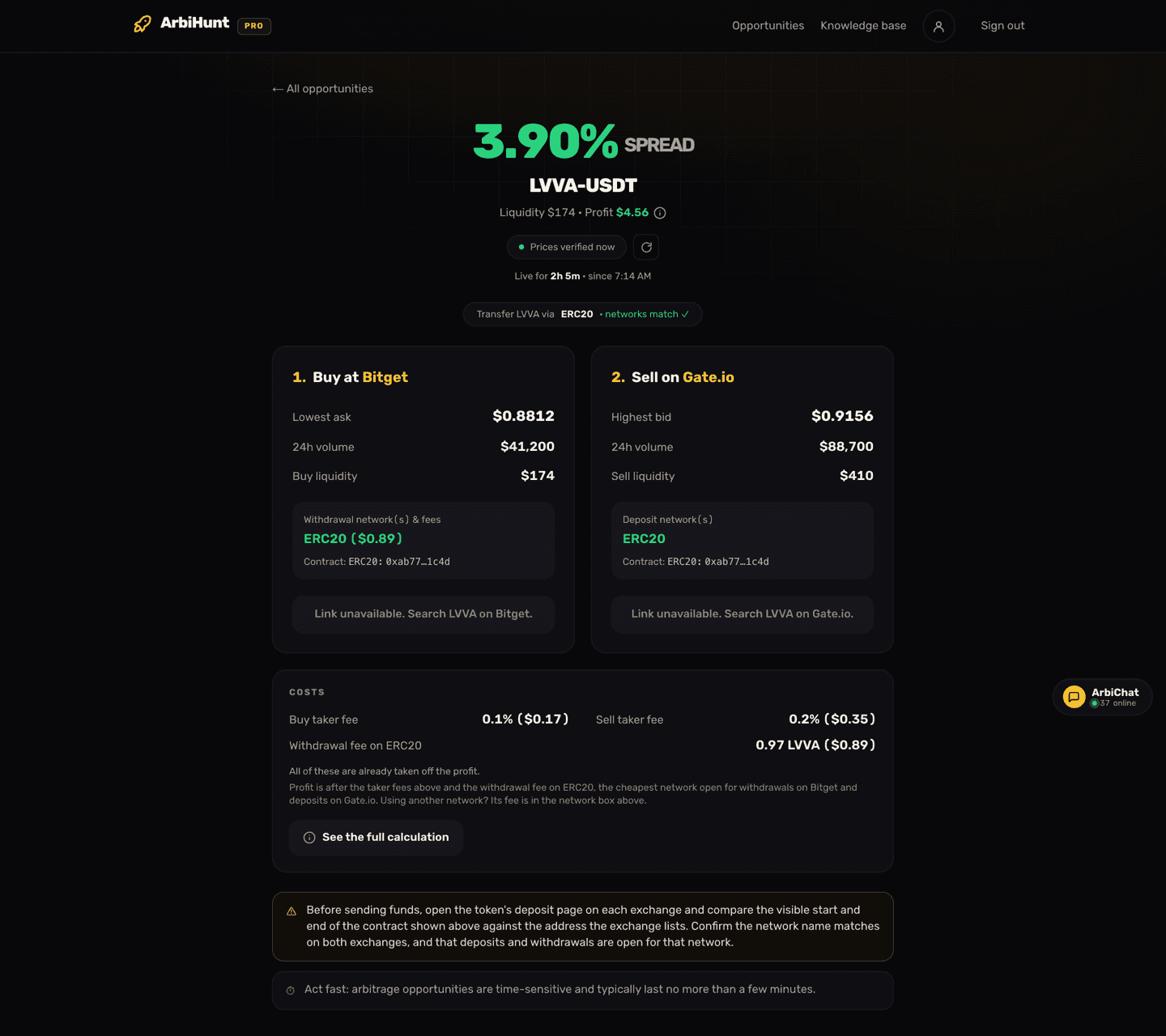
Maker vs taker fees in crypto arbitrage
Arbitrage pays the taker fee on both legs. What that costs, how VIP tiers and fee tokens change it, and why waiting for a maker fill usually loses the gap.
8 min read
How to choose the right network for a crypto transfer
Both exchanges must support the same chain for that coin. How to read the networks-match tick, handle memo chains, and price a route before you withdraw.
10 min readHow long crypto deposits and withdrawals actually take
Three clocks decide a transfer: exchange withdrawal processing, block confirmations, and deposit crediting. How to read each one before you move funds.
10 min readUsing ArbiHunt
Step-by-step guides to the dashboard, filters and opportunity details, and how to act on a spread safely.
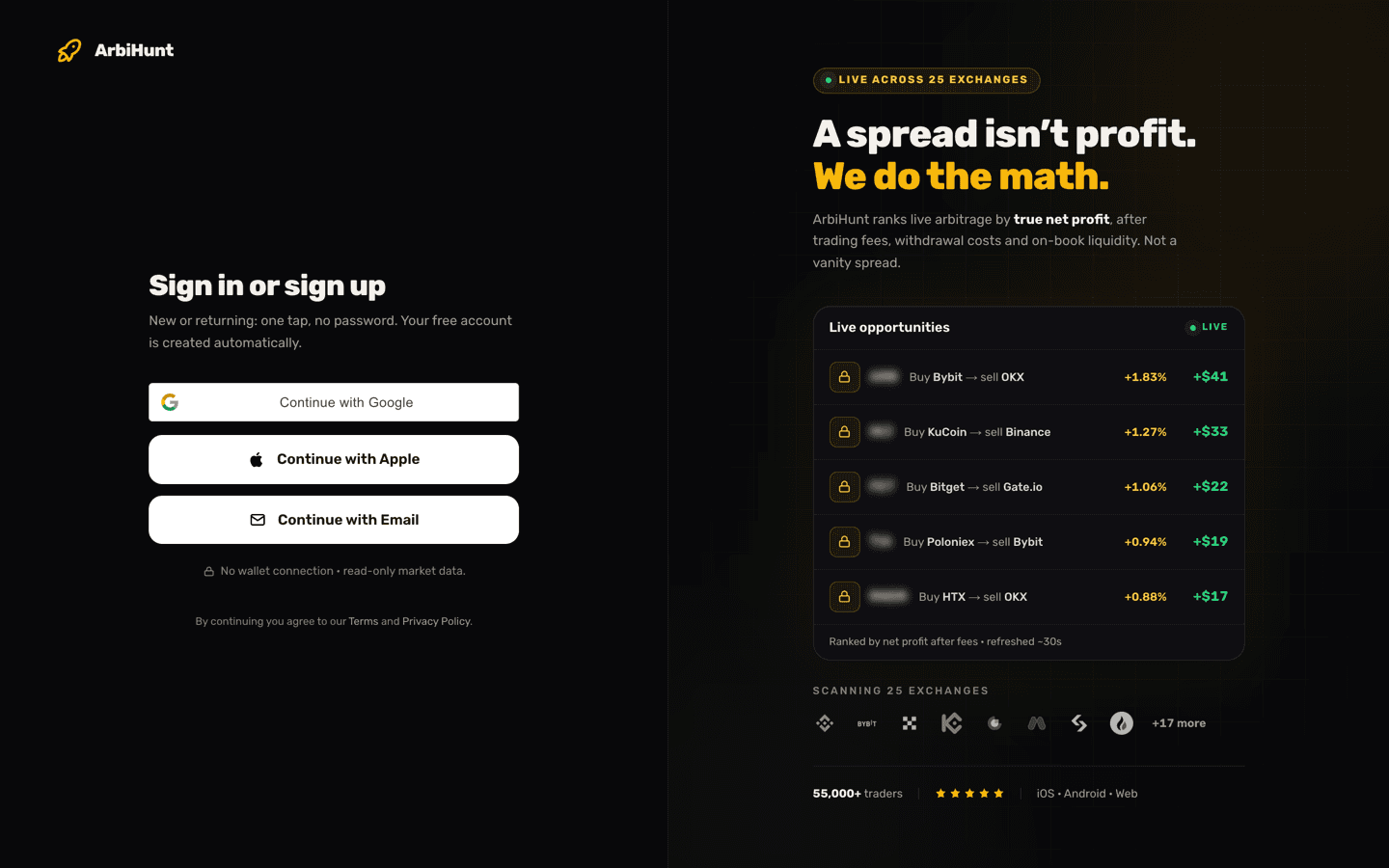
Getting started with ArbiHunt: your first 15 minutes
Create a free account with Google, Apple or a 6-digit email code, learn to read one live opportunity row, and run the checks before you risk any money.
10 min readHow to read the ArbiHunt dashboard, column by column
Every tile, control and column on the ArbiHunt board explained: spread, profit, liquidity, network and freshness, plus a pre-trade checklist.
12 min readHow to execute a crypto arbitrage trade, step by step
The full cross-exchange sequence: check the contract, network, depth and timing, then buy, transfer and sell, plus what to do when a leg fails.
10 min read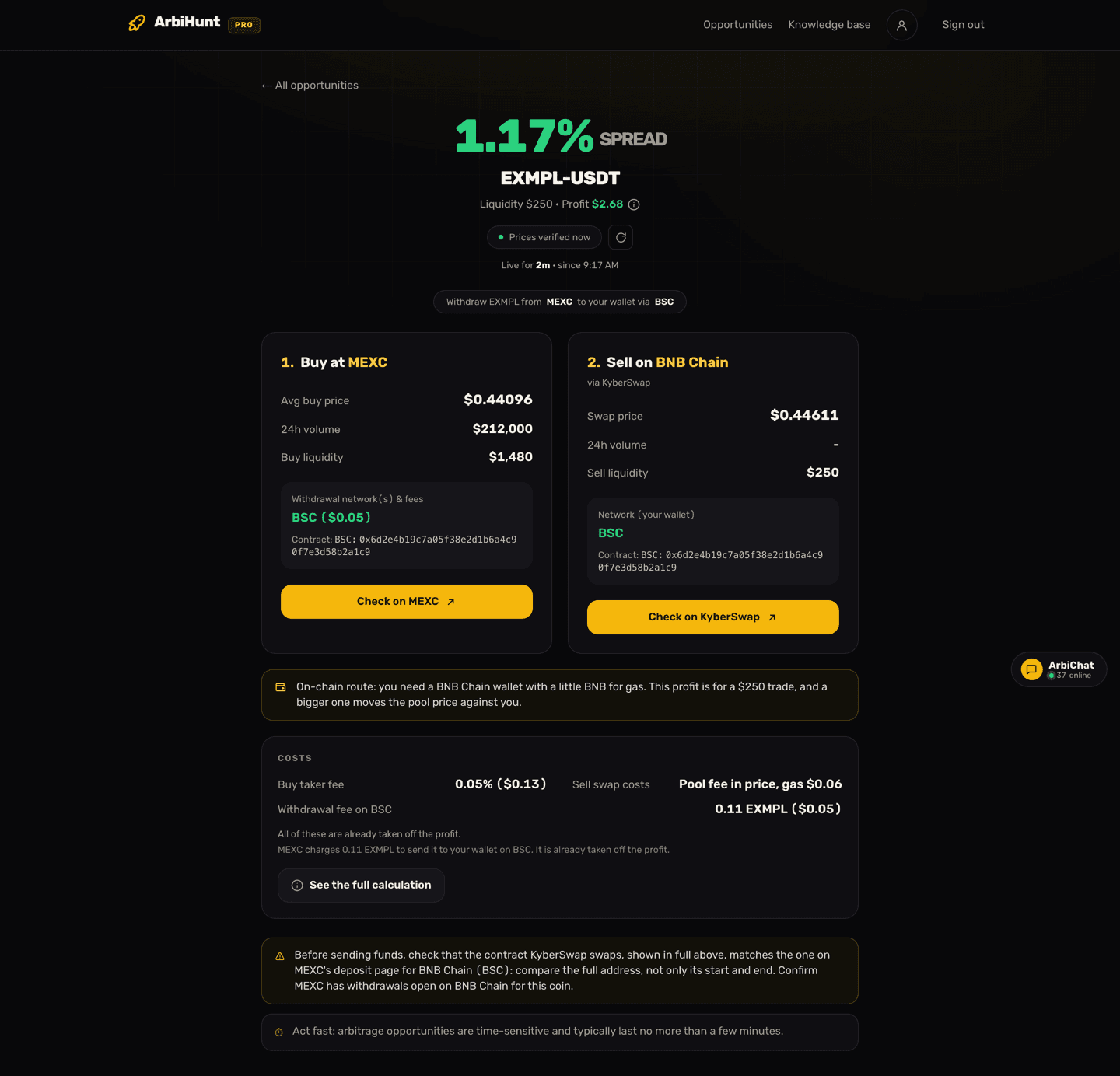
How to set up a wallet and make your first DEX trade (KyberSwap and Jupiter)
What a DEX is, why KyberSwap is not an app you download, and how to set up MetaMask or Trust Wallet, fund it for gas and USDT, and complete an ArbiHunt DEX trade step by step on BNB Chain, Ethereum, Base, Arbitrum or Solana.
23 min readSetting up your exchange accounts for arbitrage
Which exchange accounts to open first, what KYC and funding really cost you in time, and how to read deposit and withdrawal health before you commit.
9 min readUsing filters to find opportunities you can actually trade
ArbiHunt's min spread, min liquidity, exchange and network filters explained, with three worked setups and the arithmetic behind each. Filters are PRO.
13 min readHelp & FAQ
Accounts, subscriptions, payments and troubleshooting, answers to the questions members ask most.
ArbiHunt FAQ: getting started
How to sign in, what a free account shows, why 2% is the PRO line, what PRO costs, which 26 exchanges we scan, and how fresh the numbers are.
8 min readArbiHunt login & account help
Sign in with Google, Apple or a 6-digit email code, fix a code that never arrives, use one account on iOS, Android and web, and delete it safely.
7 min read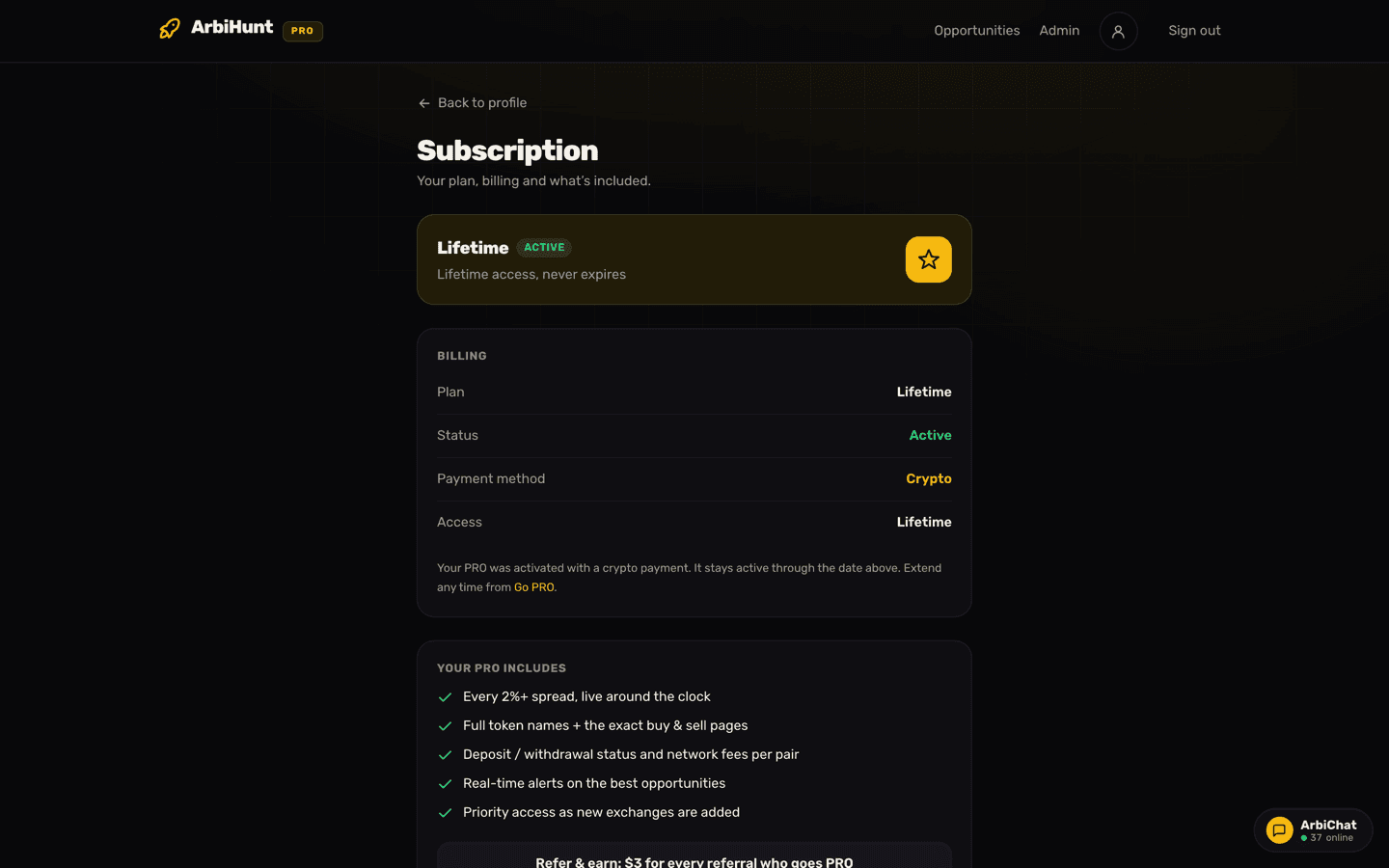
Managing your PRO subscription: check, renew or cancel
Find your ArbiHunt plan and expiry date, renew a crypto term without losing the days you have left, and cancel an App Store or Google Play subscription.
7 min readHow accurate is ArbiHunt? Data, freshness and disclaimer
ArbiHunt prices come from live order books, refreshed about every 30 seconds. What the numbers include, when a row is stale, and the plain disclaimer.
8 min readReady to put it into practice?
ArbiHunt scans 26 exchanges in real time and ranks every spread by true net profit.
Open the scanner