Arbitrage basics
What crypto arbitrage is, how it works, and the concepts behind every opportunity ArbiHunt finds.
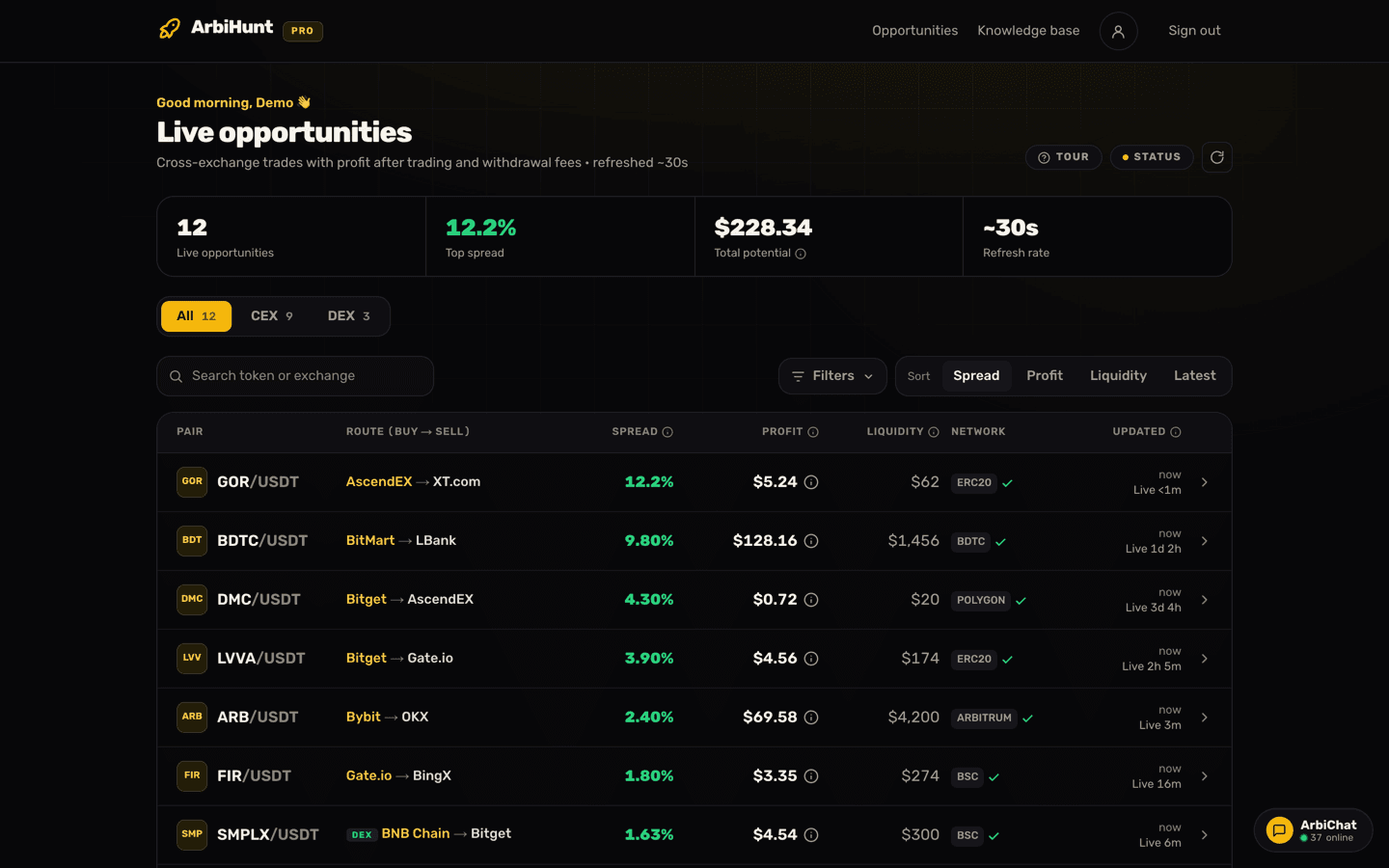
What is crypto arbitrage and how does it work?
Crypto arbitrage means buying a coin cheaper on one exchange and selling it higher on another. How the gaps open, why they close, and what you keep.
11 min read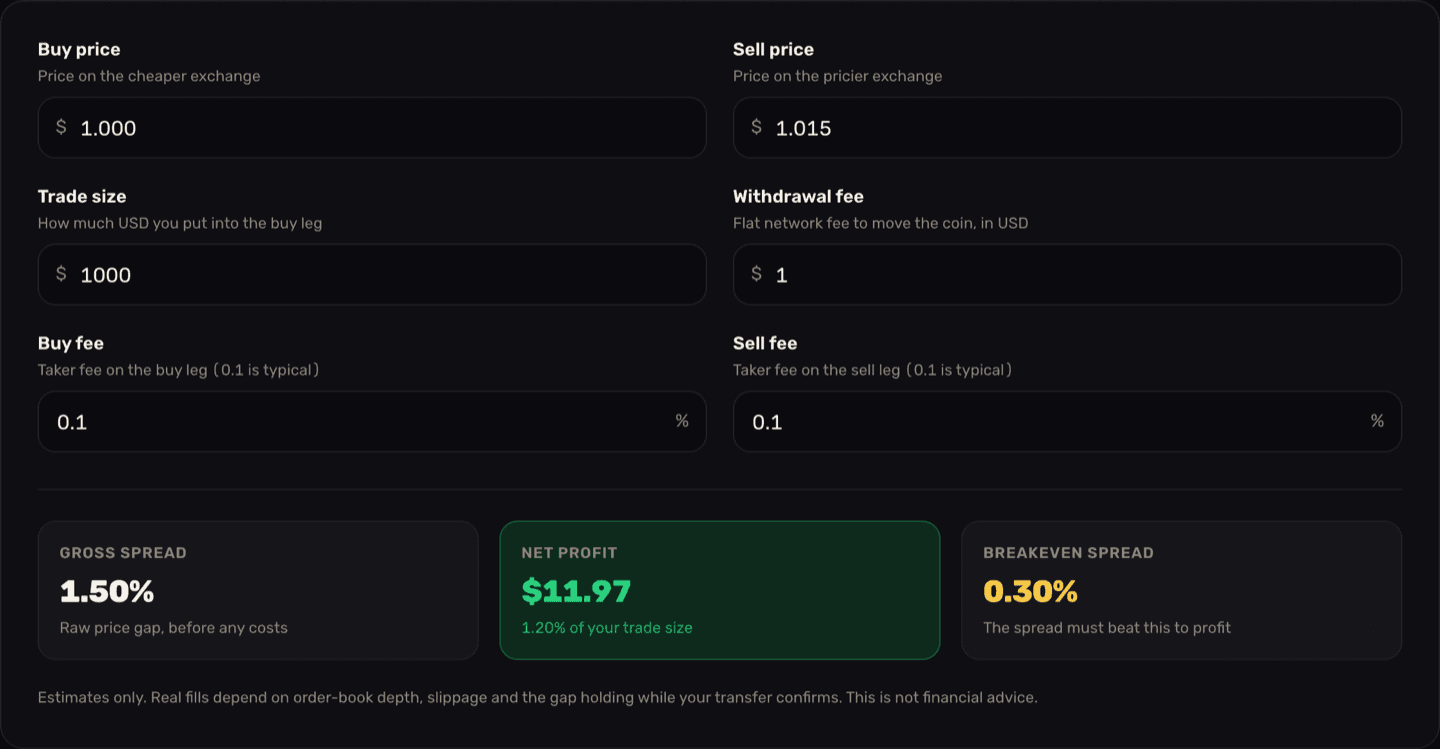
Spread vs. net profit: what an arbitrage spread really pays
A 5% spread can still lose money. Walk the full cost stack: two taker fees, the withdrawal fee, slippage, plus the breakeven formula and two examples.
11 min read
Types of crypto arbitrage: 5 strategies compared
Cross-exchange, triangular, statistical, funding-rate and DEX-CEX arbitrage compared: how each works, what it really costs, and which one suits you.
10 min readIs crypto arbitrage profitable? An honest answer
Crypto arbitrage pays for some people and quietly loses money for others. The real math on capital, fees, speed, and how to tell which one you'd be.
8 min read
Crypto arbitrage risks: 7 ways a trade goes wrong
Is crypto arbitrage safe? The seven failure modes that actually cost traders money, ranked by how often they bite, each with a concrete way to avoid it.
8 min read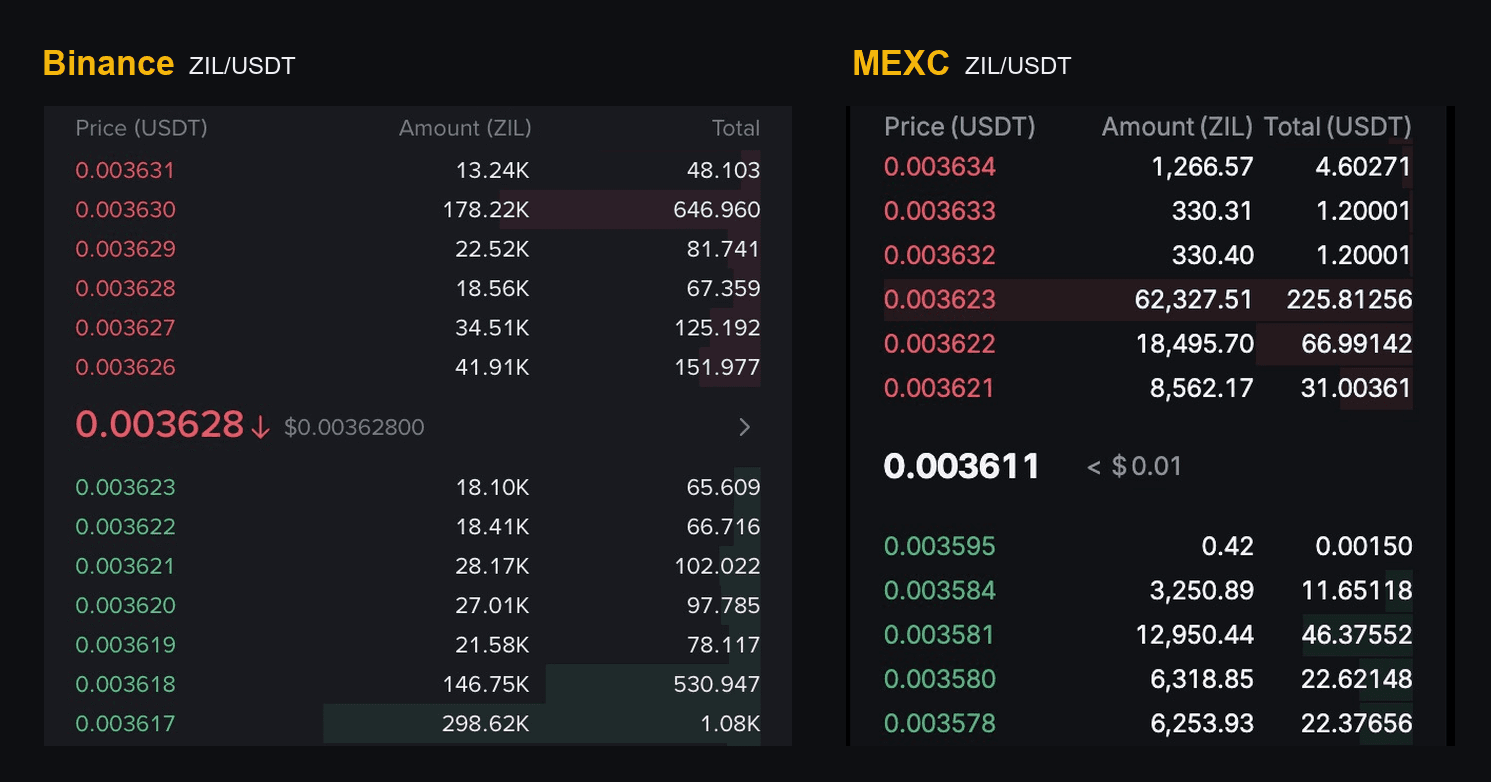
How to read a crypto order book (and why your limit order is not filling)
Bids, asks, the spread and depth, read off two real ZIL/USDT order books. Why a limit order sits unfilled, what a market order really costs, and why ArbiHunt reads books, not last prices.
12 min readWhere does an arbitrage gap come from?
Every gap has two prices, and usually only one of them is out of line. How ArbiHunt compares both with the coin's market price, why an underpriced buy pays whoever buys first while an overpriced sell is a race to sell first, and when it cannot tell.
9 min read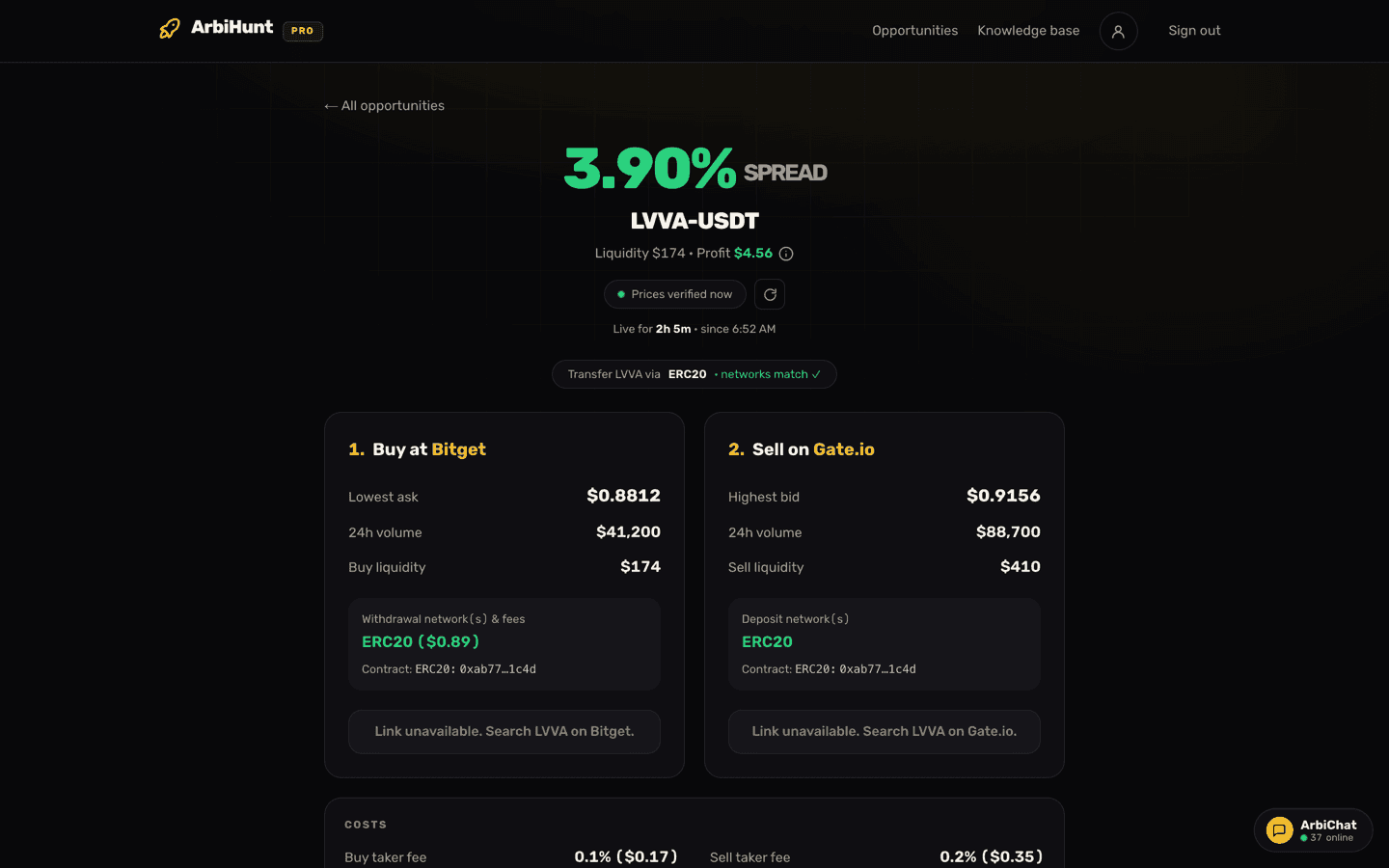
Crypto arbitrage bot vs scanner: which should you use?
A bot trades with your API keys. A scanner prices the gap and leaves the decision to you. The honest trade-off, and why ArbiHunt never asks for keys.
8 min read